
What are Agentic Business Processes?
Artificial Intelligence is increasingly being used to automate business processes. But there is a big difference between adding AI to a workflow and building a truly Agentic Business Process.
So, what exactly is an Agentic Business Process?
Agentic Business Processes are business processes in which specialised (AI) agents work together to gather information, interpret context, make decisions and perform specific tasks within defined business goals and guardrails.
And how do these processes create business value?
The business value of Agentic AI lies in turning your organisation’s scattered information and know-how into actionable insights and a more efficient way of working. By improving business processes with AI agents, you can:
Reduce repetitive work and costs. Automate time-consuming work such as finding, checking and processing information.
Increase relevance and stay ahead. Quickly provide the right answer or insight for a specific business problem, freeing up time to focus on what really matters to your business.
Unlock and scale organisational know-how. Make valuable knowledge accessible across teams instead of leaving it with individual employees.
Make better decisions, faster. Get the right information, context and expertise when you need it.
How does it work: an Agentic Business Process ?
Instead of asking one general-purpose AI model to handle an entire workflow, an Agentic Business Process divides the work into specialised tasks. Different (AI) agents are responsible for different parts of the process and work together to produce a reliable business outcome.
Think of it as a team of specialists rather than one generalist.
One agent might retrieve information. Another determines whether that information is relevant. Another identifies relationships between pieces of information. Another may generate an explanation or recommendation.
The result is not simply an AI-generated answer. It is a business process designed around a specific outcome.
A simplified process might look like this:
Data Ingestion → Entity Recognition → Relevance Analysis → Context & Relationships → Business Insight → Action
Each stage has a specific purpose.
FOR EXAMPLE
- Data ingestion collects information from relevant internal and external sources.
- An Entity Agent identifies companies, products, people, topics or other relevant entities.
- A Relevance Agent filters information using statistical or deterministic methods.
- A Clustering or Context Agent identifies relationships and connects information to existing knowledge.
- A final stage transforms the verified information into a business insight, recommendation or action.
This architecture means that every part of the process can use the technology that is best suited to the task.
An LLM may be useful for understanding language. A statistical model may be better at detecting patterns. A database may be better at storing relationships. Conventional software may be the best solution for calculations, sorting or validation.
Agentic does not mean using AI everywhere. It means using the right intelligence at the right point in the process.
Agentic AI vs Agentic Business Process
The terms AI agent and Agentic Business Process are closely related, but they are not the same thing.
An AI agent is an intelligent software component capable of performing a task, often by interpreting information and deciding what to do next.
An Agentic Business Process goes a step further.
It connects multiple capabilities into a structured business process with a defined purpose, context, data sources, rules and outcomes.
AGENTIC BUSINESS PROCESSES vs AGENTIC AI
| AI Agent | Agentic Business Process |
|---|---|
| Focuses on a task | Focuses on a business outcome |
| May operate independently | Coordinates multiple specialised capabilities |
| Often works with a limited context | Uses business-specific context and data |
| Produces an answer or action | Produces a repeatable business result |
| Can be generic | Designed around a specific organisation or department |
| Agent-level governance | Process-level governance and oversight |
This distinction matters.
A collection of AI agents does not automatically create an Agentic Business Process. The agents need to work together within an architecture that makes sense for the actual business problem.
Hybrid intelligence: using AI where it adds value
An effective Agentic Business Process can combine:
- specialised language models
- deterministic algorithms
- statistical analysis
- traditional software
- structured databases
- graph databases
- vector search
- human expertise and validation
For example, a small language model may identify an entity in a document, while deterministic rules validate the result. A graph database can then provide additional context by connecting that entity to related companies, products or events.
This combination creates what we call hybrid intelligence.
The objective is not to maximise the amount of AI in a process.
The objective is to maximise the quality and usefulness of the business outcome.
What makes an Agentic Business Process trustworthy?
Giving AI more autonomy also makes governance more important.
A production-ready Agentic Business Process should therefore not only be intelligent. It should be traceable, controlled and explainable.
Important considerations include:
- What data did an agent use?
- Where did the information originate?
- Which agent performed which task?
- Which rules or models were applied?
- How was the result validated?
- When should a human intervene?
- What happens when the system is uncertain?
This is why an Agentic Business Process should be designed as an architecture rather than simply assembled from AI agents.
The process needs clear responsibilities, defined boundaries and appropriate human oversight.
DPG Media: Agentic Business Process in Practice
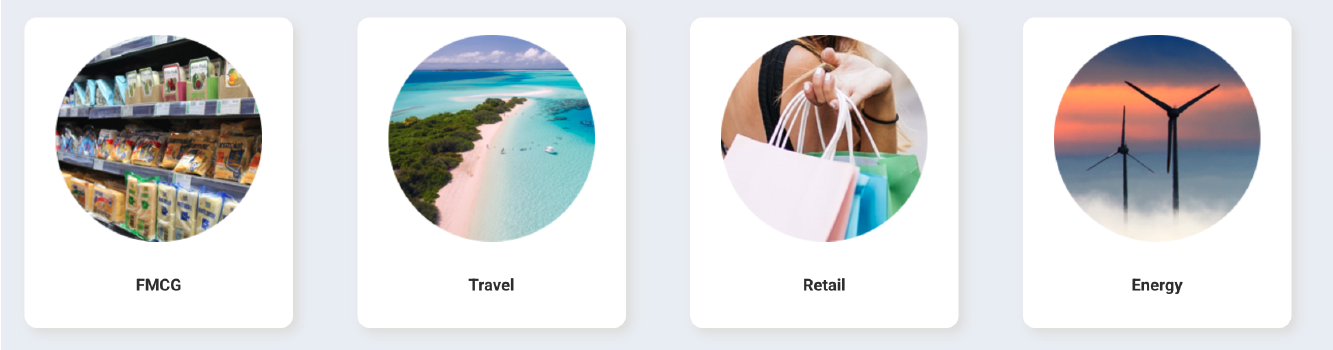
A practical example of an Agentic Business Process is the work Kentivo developed with DPG Media.
The challenge was simple: sales teams need to stay up to date with constantly changing market developments, but finding, analysing and translating relevant information into useful sales talking points takes time.
Kentivo built an Agentic Business Process that continuously collects, filters and analyses market information and transforms relevant developments into actionable sales intelligence.
Rather than relying on a single AI model, specialised capabilities work together to identify relevant information, understand its context and turn it into useful insights for sales teams.
The result: less manual research and faster access to relevant, customer-specific talking points.
How Kentivo builds Agentic Business Processes
At Kentivo, we build Agentic Business Processes around the actual business problem, rather than starting with a particular AI model.
Our proprietary Genie AI platform provides the technology foundation. Genie orchestrates specialised micro-agents, data sources, models and algorithms, allowing us to build AI processes specifically around the needs of an organisation or team.
Each component has a defined role and can use the technology best suited to the task. This modular architecture makes it possible to improve or replace individual components without rebuilding the entire process.
Our platform is designed for production use, traceability and European data governance. And because we build focused Agentic Business Processes rather than large, generic enterprise platforms, organisations can start small with a specific business problem or team and scale from there.
Tailored to your team. Built around your data. Affordable to implement.
That is how Kentivo turns Agentic AI into practical business processes.
Ready to implement Agentic Business Processes in your organization?
Kentivo’s Agentic Business Processes platform orchestrates specialised micro-agents around your specific business goals—ensuring traceability, EU data compliance, and operational efficiency.
Recent Posts
Work Smarter with Automated Market Insights
“I regularly create market reports, but it’s still mostly manual work. I feel like AI could make this more efficient —...
Stop killing a fly with a cannon
Stop killing a fly with a cannonArtificial Intelligence has become the default answer to almost every business...
Kentivo Group acquires Media Digitaal B.V. (MDInfo)
The Kentivo Group of companies is delighted to announce the acquisition of MediaDigitaal B.V. in Amsterdam, The...